
Advanced Thermal & Acoustic Sensors
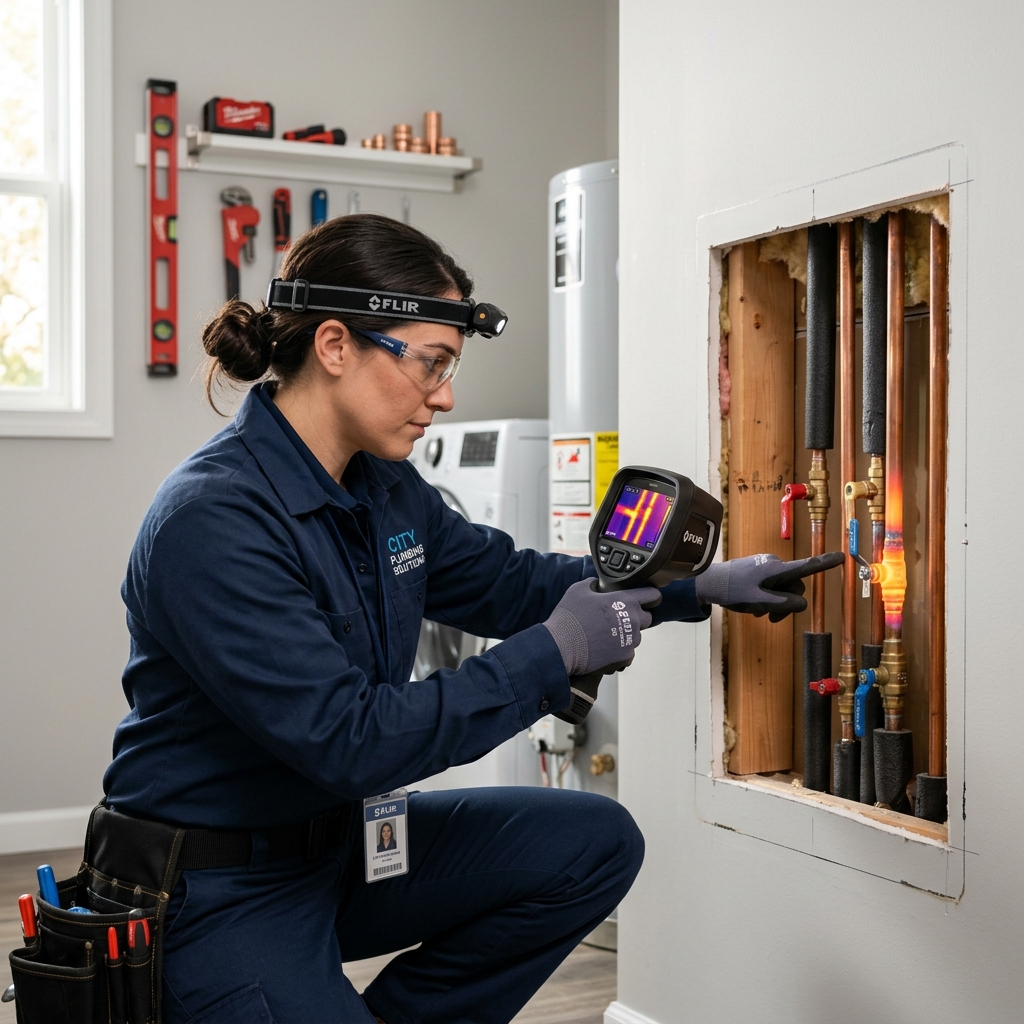
High-resolution thermal cameras reveal hidden moisture footprints behind drywall, while acoustic wall listening tools amplify water escaping under pressure.
Unexplained water bill increase, damp spots on drywall, water stains on ceilings, warm flooring patches, or low water pressure? A hidden pipe leak behind a wall, inside a ceiling, under your slab, or along an underground service line can cause extensive structural decay, toxic mold growth, and severe foundation movement if left undetected.
Our McKinney pipe line leak detection specialists use non-invasive thermal infrared cameras, acoustic wall listening devices, digital pressure testing, and electromagnetic pipe locators to pinpoint exact leak locations in Copper, PEX, PVC, CPVC, and Cast Iron pipes — without tearing down drywall or destroying your flooring.
Trusted across McKinney, Stonebridge Ranch, Craig Ranch & North Dallas
Pipe Leak Specialists
Finding a hidden pipe leak requires non-invasive acoustic sensors, thermal imaging cameras, and section pressure testing. We pinpoint the exact leak location so repair work is targeted, quick, and cost-effective.
High-resolution thermal cameras reveal hidden moisture footprints behind drywall, while acoustic wall listening tools amplify water escaping under pressure.
Our technicians understand how pinhole leaks develop in copper, fitting strain occurs in PEX, and joint failure manifests in PVC, CPVC, and cast iron lines.
We locate leaks without tearing down walls or cutting open floors unnecessarily, saving homeowners thousands in unnecessary reconstruction costs.
You receive a clear diagnostic report detailing pipe depth, leak severity, exact location markings, and recommended repair options before any work proceeds.
Stop Hidden Water Damage & Mold
Schedule a professional pipe leak inspection and pinpoint the exact source of water loss.
Our Services
From wall pipe leaks to main water service breaks, sub-slab lines, and drain pipe separations, our specialists locate hidden leaks in all plumbing pipe systems.
Rising water bills, spinning water meter, or low pressure at faucets? We isolate supply lines and use acoustic listening devices to pinpoint water pipe leaks behind walls or under floors.
Detect Water Pipe Leak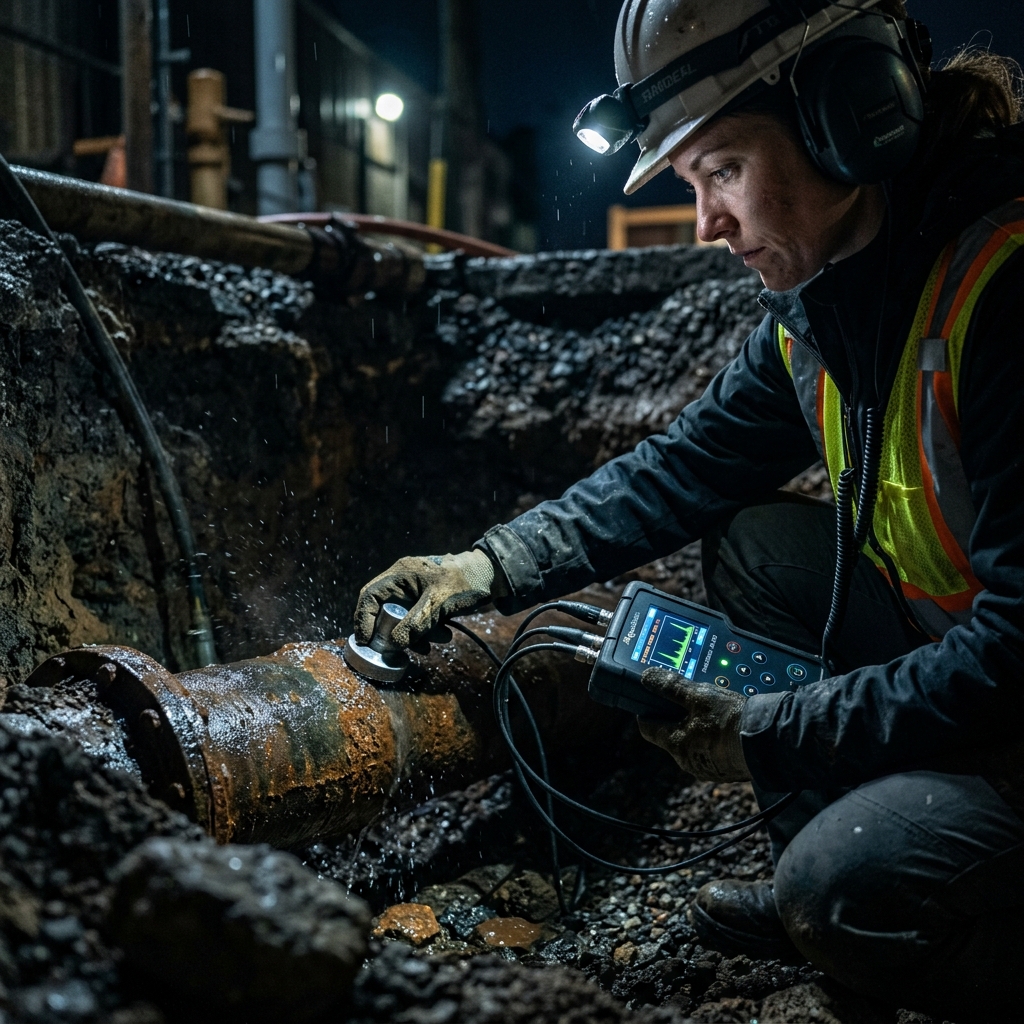
Main Water Line
The main service line running from your water meter to your home operates under constant pressure. We locate subterranean main line breaks near driveways and lawns before soil erosion occurs.
Check Main Line LeakDamp drywall, peeling paint, or ceiling discoloration indicate pinhole copper leaks or PEX fitting failures. We use thermal cameras to locate moisture behind walls without damaging drywall.
Inspect Wall & Ceiling Leak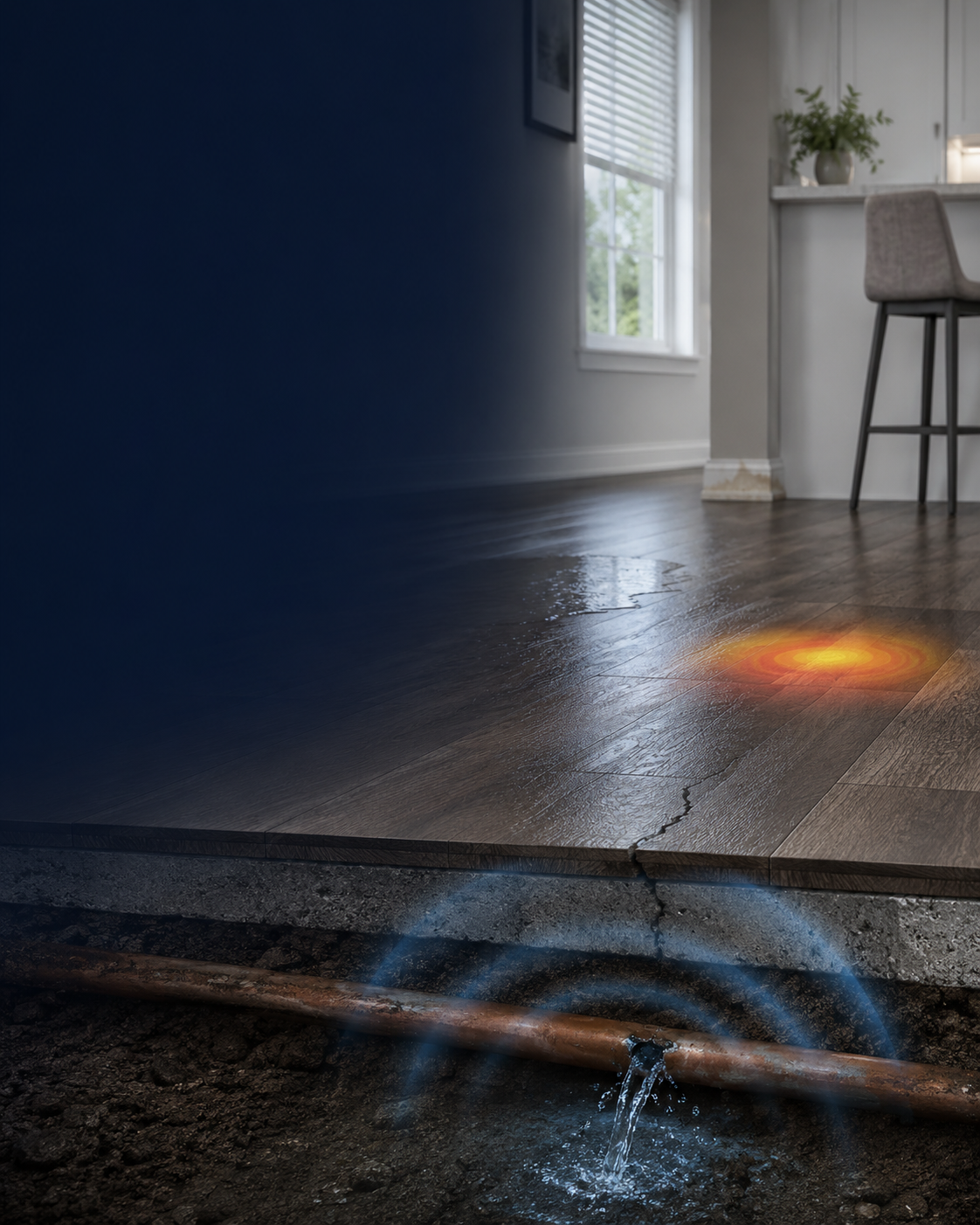
Sub-Slab Plumbing
Plumbing lines buried in concrete foundation slabs can crack due to ground movement. We locate hot and cold slab pipe leaks using acoustic ground microphones and line isolation.
Check Slab Pipe LeakLeaking sewer or drain lines cause foul odors, gurgling drains, and soil saturation. We deploy HD sewer video inspection cameras to identify cracks, root intrusion, and pipe separations.
Check Sewer & Drain Leak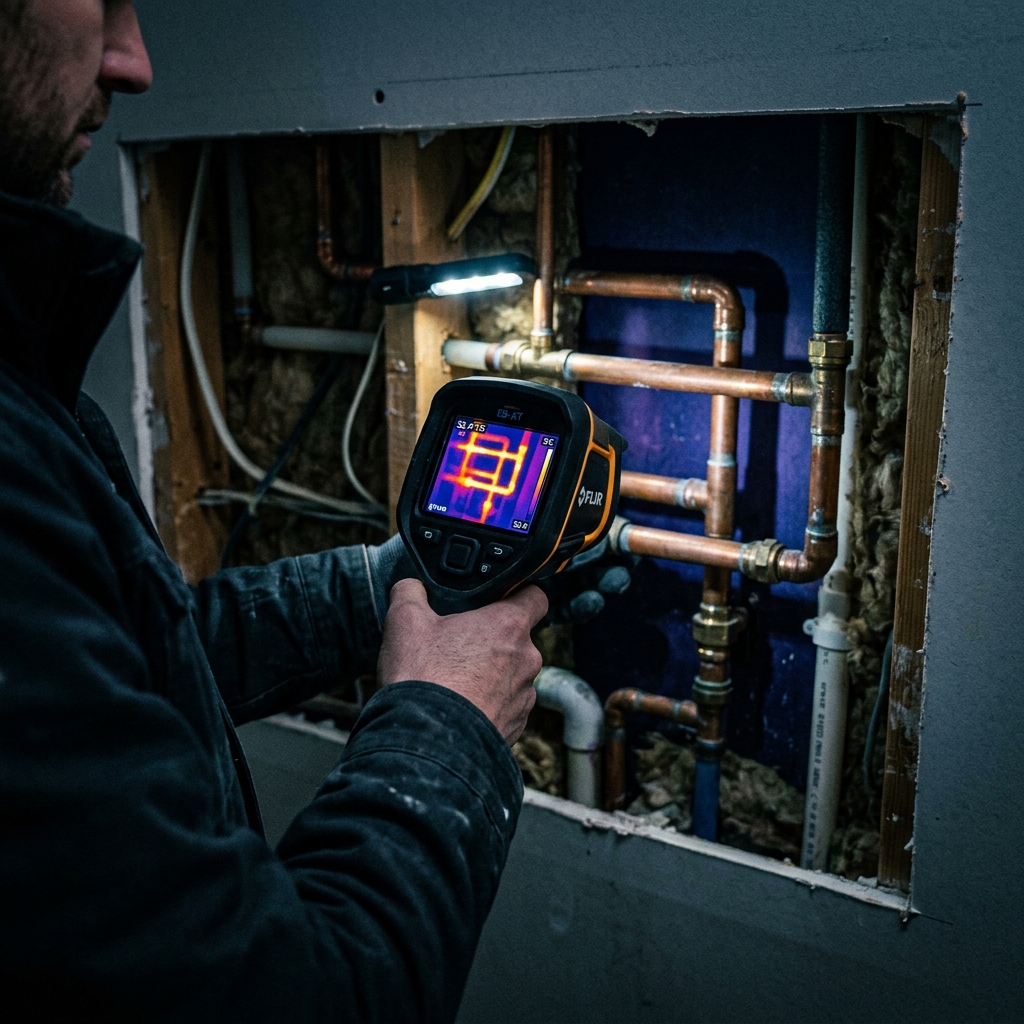
Outdoor Lines
Soggy lawn spots, squishy turf, or unusually green patches indicate underground pipe breaks. We trace buried line paths and pinpoint subterranean pipe leaks with acoustic sensors.
Detect Outdoor LeakIf a pipe burst is flooding your home, ceiling water is dripping, or your water meter is spinning out of control, turn off your main shutoff valve and call our 24/7 team for fast emergency leak location.
Call (469) 837-2954Start with a professional thermal & acoustic leak inspection so the exact leak source is marked before any repair begins.
A pipe line leak is any breach, joint failure, pinhole crack, or fitting separation occurring within your home's water supply or drainage system. In McKinney, TX, pipe leaks are especially prevalent due to high municipal water pressure surges, chemical reactions causing pinhole copper corrosion, PEX crimp ring stress, and active shifting of Collin County's black clay soil that strains subterranean and sub-slab plumbing lines. Because many pipes run behind finished drywall, under sub-flooring, or inside concrete slabs, pipe leaks frequently go undetected until major water damage or mold occurs.
Hot and cold water supply lines operate under continuous municipal pressure. When a copper pipe develops a pinhole leak or a PEX connection fails, water sprays or drips continuously 24/7. These leaks cause warm floor spots, rising water bills, ceiling water stains, and framing rot if not detected with acoustic listening equipment.
Drain lines and sewer pipes leak wastewater only when fixtures are used. Because DWV lines are unpressurized, leaks seep slowly through wall cavities, sub-floors, or beneath concrete slabs — often causing persistent sewer gas odors, mold growth, and localized flooring damage before liquid becomes visible. See our sewer leak repair guide for detailed DWV line diagnostics.
Suspect a hidden pipe leak anywhere in your home?
Get a Pipe Line InspectionAvailable 24/7 for McKinney & Collin County Residents
Warning Signs
Because many plumbing pipes are hidden inside walls, ceilings, or concrete slabs, catching these early warning signs prevents major water damage and high utility bills.
Locate Leaks Before Structural Damage Spreads
Our non-invasive thermal imaging and acoustic frequency equipment locates concealed pipe breaks behind walls and under floors — saving your home from unnecessary demolition.
Schedule an InspectionA sudden increase in your monthly city water bill without changes in household usage often indicates a pressurized supply line is leaking continuously 24/7.
Discolored rings on ceilings, bubbling wall paint, or soft damp drywall indicate water escaping from copper pinholes or PEX fittings inside wall cavities.
Hearing a continuous low hissing or rushing water sound inside walls or under flooring when all household faucets and toilets are off indicates pressurized water flow.
Unusually warm areas on tile, hardwood, or carpet flooring indicate a leaking hot water supply line running underneath your concrete slab foundation.
When water escapes from a main pipe break, water pressure drops noticeably at showers and faucets because volume is being lost before reaching the fixture.
Active Pipe Burst or Severe Leak?
Shut off your main water valve near the meter immediately to stop incoming water, then call our emergency detection team.
Our Process
Our non-invasive step-by-step methodology pinpoints hidden pipe breaks accurately, protecting your walls, flooring, and property from unnecessary destruction.
Step One
We inspect visible fixtures, review water bill history, and perform a static water meter test to confirm active pressurized water loss.
Step Two
Hot and cold water supply loops, drain lines, or main line branches are isolated and pressure tested to identify which specific pipe section drops pressure.
Step Three
We scan walls and floors with thermal cameras to identify moisture temperature footprints, then use acoustic wall microphones to capture pressurized leak sounds.
Step Four
For buried sub-slab or underground pipes, we trace the exact pipe path with electromagnetic locators or introduce safe, non-toxic tracer gas to detect micro-leaks.
Step Five
We physically mark the exact leak spot on your wall, floor, or lawn and deliver a clear report detailing pipe material, depth, and recommended repair solutions.
Start with an accurate non-invasive diagnosis of your hidden pipe leak.
Call (469) 837-2954By combining state-of-the-art thermal cameras, acoustic sensors, digital pressure gauges, and tracer gas equipment, we locate concealed pipe breaks with pinpoint accuracy.
High-sensitivity infrared cameras detect subtle surface temperature changes on drywall, ceilings, and slab floors caused by leaking hot or cold water lines behind surfaces.
Discuss MethodIsolating individual plumbing loops under digital pressure gauges confirms objectively whether a hot supply line, cold supply line, or main line branch is losing water pressure.
Schedule TestDigital acoustic wall discs and ground microphones amplify the specific sonic vibrations created by pressurized water escaping through small pipe cracks or pinholes.
Discuss MethodSafe, non-toxic tracer gas is introduced into isolated pipe lines. Because gas molecules escape through microscopic breaks and rise through concrete or soil, sensitive sniffers pinpoint hidden leaks.
Discuss MethodSelf-leveling HD optic cameras with integrated radio transmitters travel through drain and sewer pipes to visually inspect interior walls for cracks, offset joints, and root penetrations.
Discuss MethodOur pipe line leak detection team serves McKinney, TX and nearby North Dallas communities with fast response times, accurate non-invasive detection, and professional repair guidance.
Not on the list? Call us — we likely cover your area.
McKinney, TX
Primary service coverage area
Local Response
Fast pipe line leak detection across McKinney and Collin County.
Pricing Breakdown
Pipe line leak detection in McKinney typically ranges from $200 for a focused interior wall or sink line inspection to $600 for multi-story thermal imaging, sub-slab pressure testing, or main line tracer gas diagnostics.
Accessible pipes behind cabinets or sinks are faster to inspect than hidden lines inside double-sheetrock walls, attic cavities, ceiling runs, or concrete slab foundations.
Metallic lines (copper, galvanized) respond well to electromagnetic locators and acoustic discs. Non-metallic lines (PEX, PVC) may require digital pressure isolation or tracer gas.
Testing a single fixture line takes less time than a full domestic water pressure test, sewer camera inspection, and sub-slab acoustic scan performed together.
Standard acoustic listening and thermal scanning are included in our base fee. Advanced helium tracer gas setup for micro-pinhole leaks involves minor equipment preparation costs.
McKinney Water & Mold Alert: A hidden pipe leak behind drywall or inside a ceiling can spawn toxic black mold within 24 to 48 hours. Non-invasive leak detection costs far less than structural drywall replacement, flooring remediation, and professional mold abatement.
For an accurate quote tailored to your home, contact us for a professional assessment.
Request Free EstimateHomeowners across McKinney and North Dallas trust us for accurate, non-invasive pipe line leak detection.
"We noticed a damp spot on our living room wall that was slowly spreading. The technician brought in a thermal camera and located a pinhole copper leak behind the wall within 15 minutes. Marked the exact spot — plumber only made one small drywall cut!"
"Our kitchen wood floor started warping near the island, but no pipes were visible. They pressure-tested the lines and used acoustic sensors through the floor to locate a hot water pipe leak in the slab. Fast, clean, and extremely precise!"
"High water bill with zero signs of water anywhere inside. They tested the main supply line and pinpointed a leaking PVC fitting near the water meter outside. Thorough, professional, and saved us from a giant water bill."
Get clear, expert answers regarding pipe leak detection technology, costs, non-invasive methods, and repair options in McKinney, TX.