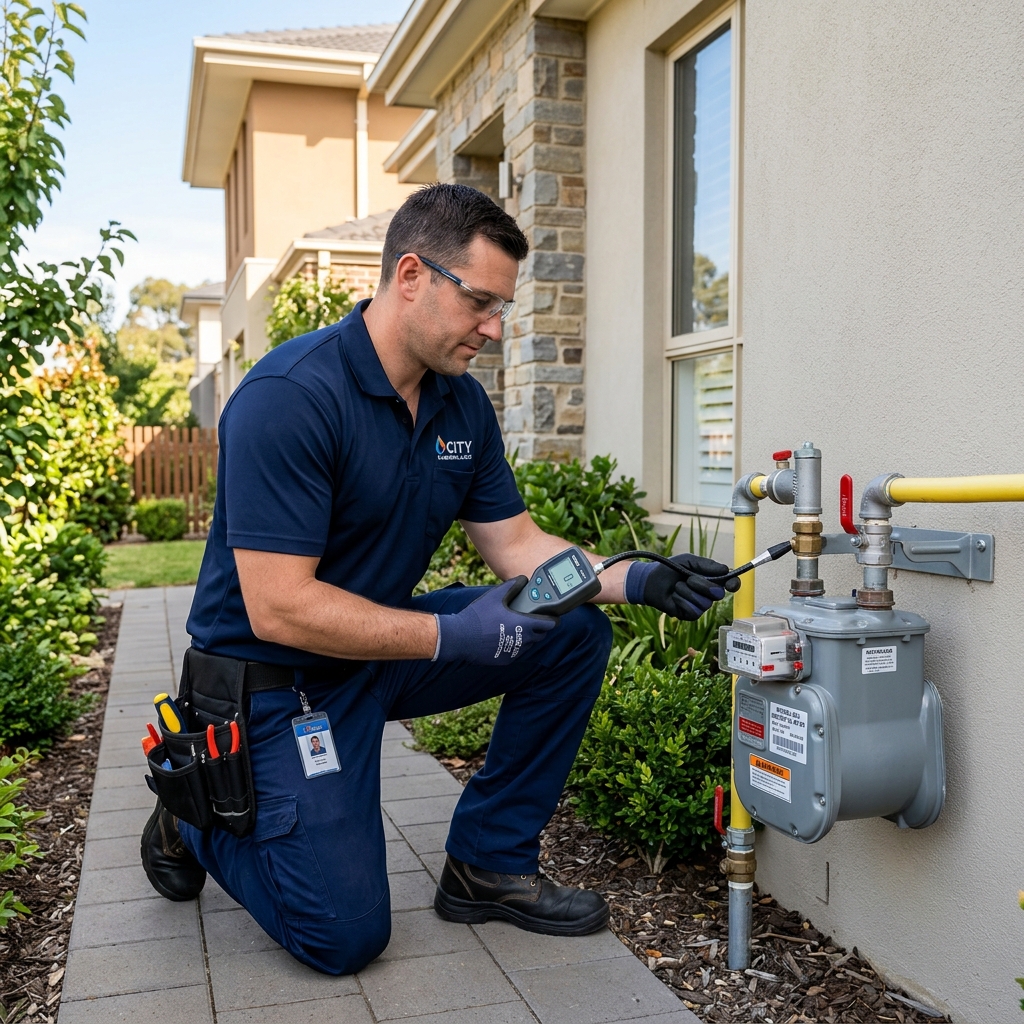
Electronic Gas Detection Equipment
Calibrated combustible gas sensors detect even trace concentrations of natural gas or propane — finding leaks that are not yet visible or smellable from a distance.
Smell gas near your stove, water heater, furnace, fireplace, or outdoor gas line? A hidden gas line leak is one of the most urgent safety issues a McKinney homeowner can face. Natural gas and propane leaks can accumulate indoors or underground — creating fire, explosion, and carbon monoxide risks if left undetected.
Our McKinney gas line leak detection team uses calibrated electronic combustible gas sensors, pressure testing, and systematic visual inspection to accurately locate leaks in interior piping, appliance connections, gas meters, shutoff valves, underground service lines, and propane systems — before any repair work begins.
Trusted across McKinney, Stonebridge Ranch, Craig Ranch & North Dallas
Gas Line Specialists
Gas leak detection requires precision equipment, systematic testing, and a safety-first approach. We locate the exact source of the leak — appliance connection, pipe fitting, underground line, or meter area — before any repair work is recommended.
Calibrated combustible gas sensors detect even trace concentrations of natural gas or propane — finding leaks that are not yet visible or smellable from a distance.
Every inspection begins with a safety assessment. We follow a systematic protocol that prioritizes your family's safety before any technical testing proceeds.
Pressure testing confirms whether the gas system holds or loses pressure — providing objective evidence of a leak and validating that repairs have resolved the issue.
We explain where the leak is, what caused it, and what repair options are available — so you make an informed decision before any work is approved or started.
If You Smell Gas Right Now
Do not operate any electrical switches. Do not use your phone indoors. Leave the door open and move away from the building before calling.
Our Services
Whether the concern is an interior appliance connection, underground gas line, gas meter, or outdoor propane system — we locate the leak source accurately so repair can target the right area.
Smell gas, hear hissing near a pipe, or suspect a hidden leak? We use electronic gas sensors and pressure testing to locate the leak source — appliance connection, pipe fitting, meter area, or underground line.
Detect Gas Leak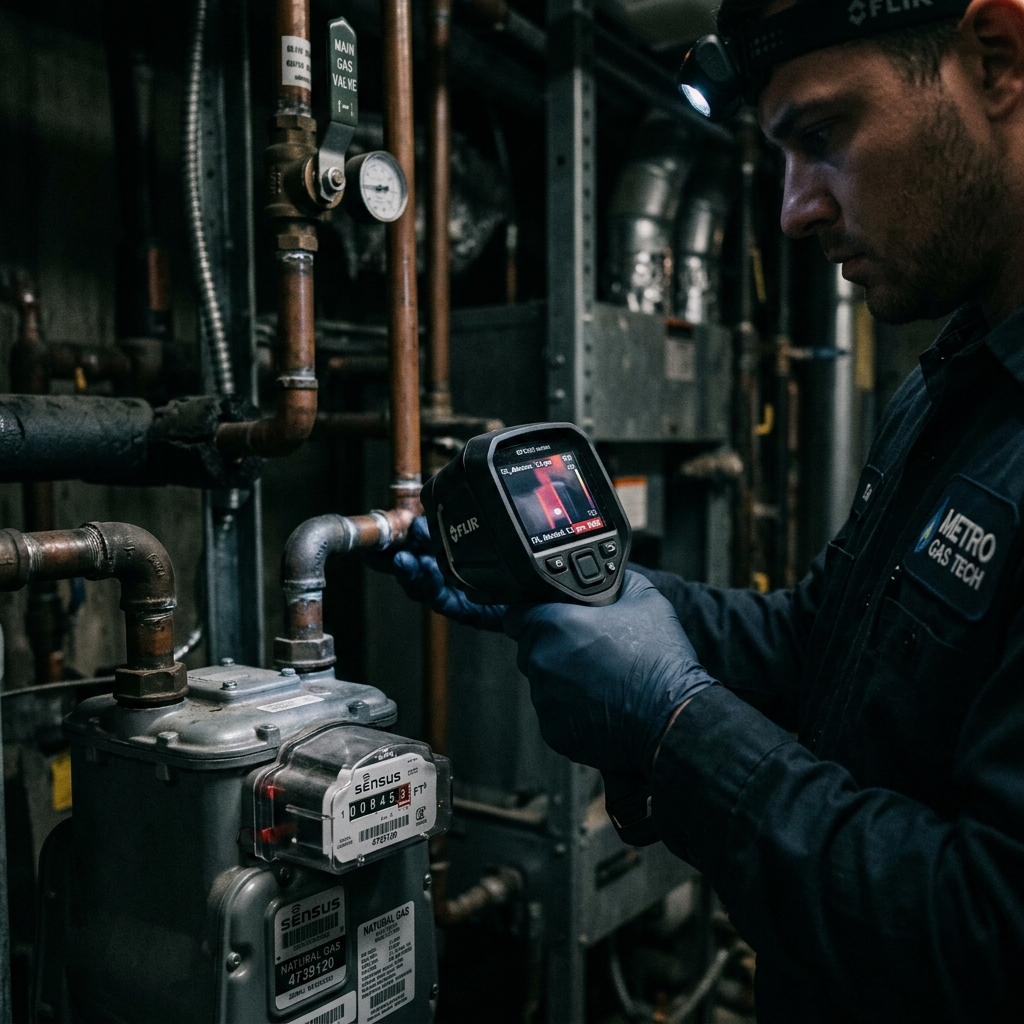
Underground Lines
Underground gas lines can leak due to soil movement, corrosion, tree root pressure, or digging damage. We locate buried gas line leaks near outdoor kitchens, pool heaters, fire pits, and detached structures.
Check Underground LineGas leaks often develop at appliance connectors, flex lines, shutoff valves, and fittings. We inspect connections for stoves, water heaters, furnaces, dryers, fireplaces, and outdoor grills.
Check Appliance Leak
Inside the Home
Interior gas piping can leak at threaded joints, wall penetrations, attic runs, and appliance branches. We inspect accessible piping to identify leak concerns without unnecessary disruption.
Check Interior PipingPressure testing confirms whether the gas piping system holds pressure correctly. Required after new gas appliance installation, line repair, or when a permit inspection is needed to verify system integrity.
Request Pressure Test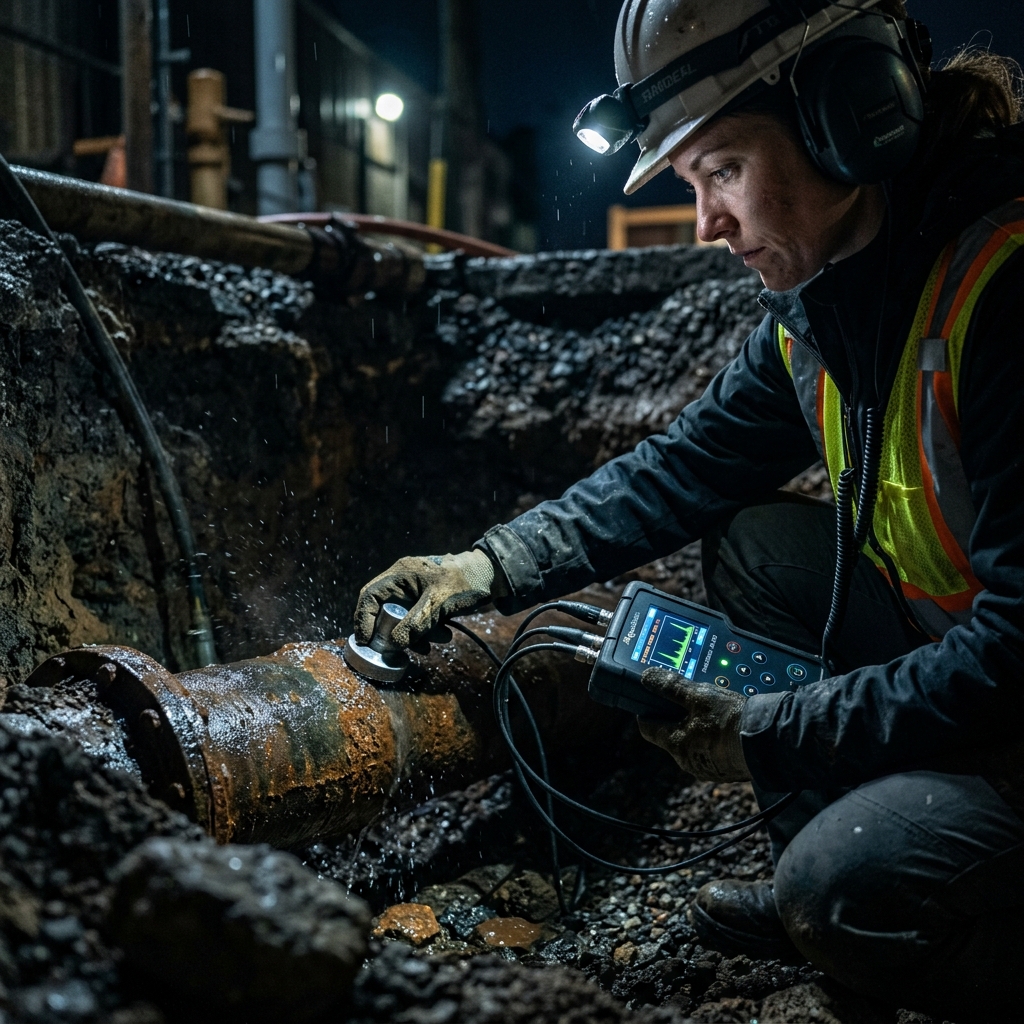
Propane Systems
Some McKinney-area properties use propane for outdoor appliances, grills, fire pits, and detached structures. We inspect propane lines, tank connections, regulators, and fittings to locate possible leak sources.
Detect Propane LeakThe gas meter, regulator, shutoff valve, and nearby fittings are common areas for gas odor complaints. We inspect these exterior components to determine whether the concern is near the meter or inside the home's gas piping.
Call (469) 837-2954Call us to describe what you are experiencing and we will determine the right type of inspection for your situation.
A gas line leak is any crack, failed fitting, corroded joint, or damaged connection that allows natural gas or propane to escape from the piping system. Unlike water leaks, gas leaks are invisible and often odorless in their natural state — which is why Atmos Energy adds mercaptan, a sulfur-based odorant that smells like rotten eggs, as a safety warning. In McKinney TX, gas line leaks commonly develop due to aging black iron pipe, ground movement from expansive clay soil that stresses underground lines, freeze damage to outdoor connections, deteriorated flexible appliance connectors, and loose or corroded threaded fittings that develop gaps over time.
Interior gas line leaks occur at threaded pipe fittings, appliance flex connectors, shutoff valves, gas range connections, water heater supply lines, and furnace connections. Older homes in McKinney may have aging black iron pipe with deteriorated thread sealant. Appliance connectors — especially older corrugated metal flex lines — can crack and fail over time, releasing gas inside the home where it can accumulate undetected.
Underground gas service lines running from the meter to the home, or from the home to outdoor appliances, can corrode, crack, or be damaged by shifting soil. McKinney's expansive black clay causes significant ground movement that can stress buried gas pipe connections over time. Underground gas leaks can sometimes be identified by dead or dying vegetation in a specific area, a persistent gas odor outdoors, or visible bubbling in standing water near the gas service entry. Professional pressure testing and underground detection equipment are required to locate these leaks accurately.
Suspect a gas leak anywhere on your property?
Call for Gas Line InspectionAvailable 24/7 for McKinney & Collin County Residents
Warning Signs
Some gas leaks produce obvious warning signs. Others are subtle. If you notice any of these indicators, treat the situation seriously and contact a licensed gas line specialist.
Treat Every Gas Smell as an Emergency
Do not operate switches, open flames, or use your phone indoors. Leave the building, leave the door open, and call 911 from outside. Then call us.
Call (469) 837-2954Natural gas has a sulfuric (rotten egg) smell added intentionally as a safety warning. If you smell this odor near appliances, the meter, or in your yard — treat it as an emergency.
A continuous hissing, whistling, or blowing sound near a gas pipe, appliance connection, or outdoor gas fitting indicates gas is actively escaping under pressure.
A circular patch of dead, yellowing, or wilted grass or plants in your yard — especially above the path of an underground gas line — can indicate a gas leak displacing oxygen in the soil.
A significant spike in your monthly gas bill without a change in usage habits can indicate a leak in the line — particularly a mainline leak that wastes gas continuously.
Headaches, dizziness, nausea, or fatigue experienced by multiple household members that improve when you go outside can indicate gas is accumulating indoors from a hidden interior leak.
Active Gas Emergency
If you suspect an active leak: do not operate switches, don't use the phone indoors, leave the door open, move away, then call 911.
Our Process
Safety leads every step. We evaluate the situation, test the system methodically with professional equipment, and confirm findings before any repair recommendation is made.
Step One
We discuss the warning signs you noticed — odor location, appliance behavior, meter readings — and perform a visual safety sweep before any test equipment is deployed.
Step Two
Using calibrated combustible gas detectors, we scan appliance connections, flex lines, shutoff valves, pipe fittings, meter areas, and interior piping to identify any gas concentration.
Step Three
The gas line is isolated and pressure tested to confirm whether the system holds pressure. A pressure drop objectively confirms an active leak in the line or at a connection point.
Step Four
Combining the electronic sensor readings and pressure test results, we identify the specific location — fitting, joint, valve, appliance connector, or underground section — where gas is escaping.
Step Five
We explain where the leak is, what caused it, and the recommended repair options. No repair begins until you understand and approve the next step.
Gas leak concerns should be diagnosed accurately — not guessed at.
Call (469) 837-2954Accurate gas leak detection relies on combining multiple methods. Each approach provides different information — together they confirm the location and severity of the leak before repair begins.
Calibrated combustible gas detectors sense trace concentrations of natural gas or propane — even before the odor becomes noticeable. We scan fittings, valves, appliance connections, and piping to identify leak sources precisely.
Learn MoreThe gas line is isolated and pressurized. A drop in pressure objectively confirms an active leak is present — without relying on sensor readings alone. Also used to verify the system is leak-free after repair is completed.
Schedule TestSystematic visual inspection of accessible pipe runs, threaded fittings, flex connectors, valve bodies, meter connections, and appliance supply lines for signs of deterioration, corrosion, or physical damage.
Learn MoreA non-destructive method to confirm leaks at specific fitting locations. Leak detection solution is applied to suspected joints, valves, and connections — bubbling confirms gas is escaping at that exact point.
Learn MoreFor buried gas service lines, pressure testing and surface scanning equipment help narrow down the section of underground pipe that is leaking — minimizing excavation to only the affected area.
Learn MoreOur gas line leak detection team serves McKinney, TX and nearby North Dallas communities. For active gas emergencies, call us and emergency services simultaneously.
Not on the list? Call us — we likely cover your area.
McKinney, TX
Primary service coverage area
Local Response
Fast gas line detection support across McKinney and nearby communities.
Pricing Breakdown
Gas line leak detection in McKinney typically ranges from $150 for a focused appliance connection inspection to $500 or more for full-system pressure testing and underground line assessment.
A focused appliance connection check costs less than a full-system inspection that includes interior piping, underground lines, meter, and all appliance connections throughout the property.
An accessible appliance connection or meter area leak is faster to locate than a buried underground gas line leak that requires additional pressure testing and surface scanning.
Homes with multiple gas appliances — stove, water heater, furnace, dryer, fireplace, outdoor grill, pool heater — require more time to systematically inspect each connection.
Detection inspections typically don't require a permit. However, if gas line repairs or modifications follow, a McKinney permit may be required depending on the scope of work.
Safety First: Do not delay gas leak detection because of cost concerns. A gas leak that is not found and repaired creates fire, explosion, and carbon monoxide poisoning risks that far exceed the cost of a professional inspection. We provide upfront estimates before any work begins.
Contact us for an upfront estimate for your specific gas line inspection.
Request Free EstimateHomeowners across McKinney and North Dallas trust us for accurate, safety-first gas line leak detection and inspection.
"We smelled a faint gas odor near our water heater for a couple of days. The technician used an electronic gas detector and found a small leak at the flex connector within minutes. Explained the repair options clearly and the issue was resolved the same day. Very professional."
"My gas bill went up significantly and I couldn't figure out why. After the pressure test they found a slow leak at a pipe joint behind the wall. They were thorough, didn't try to alarm me unnecessarily, and gave me a clear repair quote on the spot. Couldn't ask for more."
"I noticed dead grass above our underground gas line and called them right away. They pressure-tested the service line and confirmed the leak, then marked the exact location so the repair could be made with minimal digging. Straightforward process — exactly what you want for a gas issue."
Safety-focused answers to common questions about gas line leak detection, warning signs, inspection costs, and what to do in an emergency in McKinney, TX.